The Pharisees and Sadducees took pride in being descendants of Abraham as if that alone assured their salvation. They took pride in their power, position, prestige and religious ritualistic practices. Their pride made them deaf to John's warnings. They not only could not receive his words, but had no desire to receive them. (Luke 11:37-54).
Read MoreIn March 4 AD Herod fell ill and went to his palace in Jericho. He had ordered the execution of influential Jews in Jerusalem in the event of his death. He did not want people to be rejoicing at his death and this plan seemed to assure that there would be families in mourning. Upon his death his sister, Salome, countermanded the order. His eldest son Archelaus inherited the major part of his kingdom of Judea, Samaria and Idumea. However, his cruel reign only lasted to 6 AD. He massacred 3,000 men of nobility in Jerusalem. Caesar Augustus, fearing a mass revolt, exiled him to Gaul.
Read MoreThere are “Magi” (singular “Magus”). Herodotus provides some history about them. They were originally a Median tribe that became part of the Persian Empire. The Medes had tried to overthrow the Persians but failed.
Read MoreThere is a great deal of injustice that we see in this story where it appears that Jacob is rewarded by God for being a liar and a deceiver. He got what he wanted, and he also got to play a massive part in God’s big eternal plan.
Read MoreConfession. It's not a word we like to hear. It means admitting fault, surrendering pride and confidence in yourself. The world around us loves independence and self-sufficiency. But we must not be swayed by the culture around us and put too high a value on these things, even if they can be good. We must be shaped by the gospel of grace, love, humility and compassion
And this is why confession is so essential. Without it we portray ourselves as the ones who decide right and wrong, who control our own destinies. We idolise ourselves.
Read MoreThis book was clearly aimed at Jewish readers. The title shows that Jesus was a descendant of King David and Abraham. This was essential to show to Jews that Jesus was the heir of David's throne and of the covenant promises.
Read MoreGod has stirred (maybe pounded!!) my heart recently to think on, devote and invest towards the things that He sees as important. Towards the things that breaks His heart. God gave me a friendly nudge to point me in the direction of His heart. He recalled to my thoughts a couple of lines in a Christian song which go like this:
Break my heart for what breaks Yours. Everything I am for your kingdom’s cause.
Read MoreGod is the one who gives righteousness. He’s the one who can ‘fix’ us. What do we give to someone who fixes things? Something that is broken of course.
Read MoreAlthough this is a lover speaking to his beloved, I heard the voice of God strongly in this passage. I felt encouraged that He is wanting us to leave behind the 'winter’ - spiritual troubles arising from a deep sense of the guilt of sin, the wrath of God, the curse of the law (things that would make anyone feel afraid to come to God). Jesus has removed these things from us and connected us with God's grace (flowers appearing on the earth - a time of singing).
Read MoreWe can also look forward to the day when our healing will be complete and we will be physically raised in Christ with perfect bodies in a perfect world, in perfect relationship with God our Heavenly Father. We will be like calves who have spent all winter, the only life they’ve ever known, in a stall. When the farmer comes at the start of spring to release them out to their pasture, they have no real understanding of what awaits them, but when they get there, they jump and leap and run for sheer and pure joy! We can only speculate about the beauty of heaven and eternity with God, the trinity. But we have this assurance that we will “go out leaping like calves from the stall” when we get there!
Read MoreCatastrophe, pain or suffering can be a means of grace. Grace signifies the good-will of God towards us, and that is enough to enlighten and enliven us, sufficient to strengthen and comfort in all our pain and distress. It is often by the grace of a catastrophe that people may come to have a real and true encounter with God, because it blows away any abstracts of theory and gives meaning and purpose to our walk.
Read MoreOver the past few weeks myself and some friends have started reading through the Psalms. Particularly Psalms 33 and 34 have significant emphasis on the importance of words. It talks about how God's voice was powerful enough to create the universe (33:6). It calls God's people to sing and praise (33:1-3,34:1). God answers, He hears (34:4-7). The people call out and are to listen to Him (34:6,11)
Read MoreConsider Psalm 19:1-4 which says:
1 The heavens declare the glory of God;
the skies proclaim the work of his hands.
2 Day after day they pour forth speech;
night after night they reveal knowledge.
3 They have no speech, they use no words;
no sound is heard from them.
4 Yet their voice goes out into all the earth,
their words to the ends of the world.
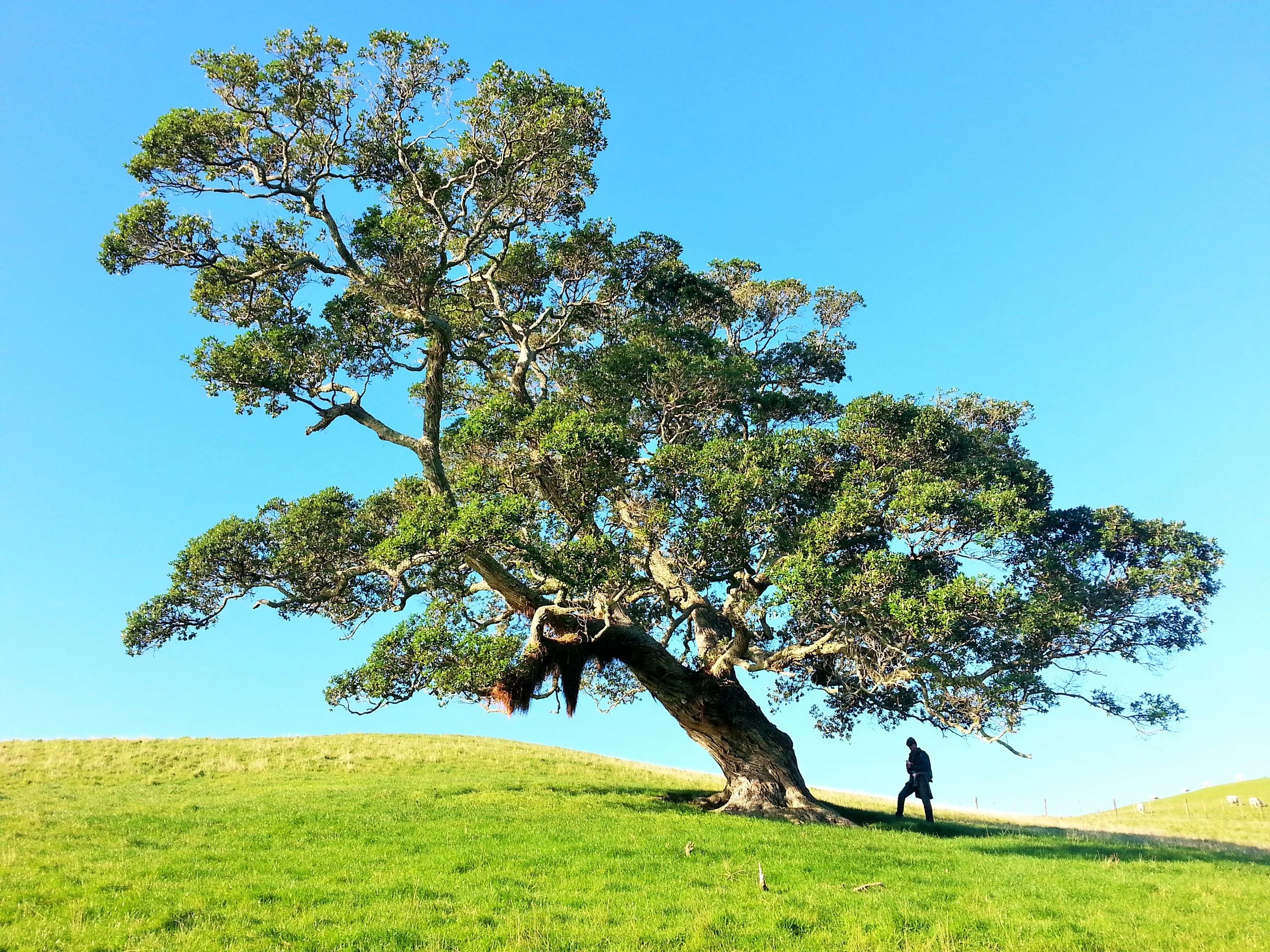
Jeremiah 17:7-8: “But blessed is the one who trusts in the Lord, whose confidence is in Him. They will be like a tree planted by the water that sends out its roots by the stream. It does not fear when heat comes; its leaves are always green. It has no worries in a year of drought and never fails to bear fruit.”
Read MoreHosanna (Save Us) is a song I have written for this Easter.
Hosanna was a cry which meant ‘Save Us!’ and as everybody was crying ‘Crucify Him’ a week later, they were actually crying out the same thing - as that is what Jesus death will have done… ‘saved’ us!
Read MoreA moment ago she'd felt completely normal. Happy and still, eyes closed, silently pondering her Lord. But a word had suddenly popped into her head, and now she couldn't think of anything else but this word. Why this word? What did it mean?
Read MoreChapter 11 of the book of Hebrews has great application and this application speaks to Fathers. Using the the heroes of faith mentioned in the passage, the word Father in an anagram form produces some characteristics of the Fatherhood of God. We ought to study and live by these characteristics as fathers, and become more like Him.
Read MoreThe contrast this passage offers is profound when we think about Father God. Father God is present where Adam isn’t. Father God comes to encourage Cain where Adam doesn’t. The story of Cain and Abel reminds us that Father God is watching us and is near us. Father God is one who seeks us out even when we are angry and struggling with wrong thoughts and intentions. Father God is not far away or absent – He is with us.
Read MoreThe disciples were suppose to be Jesus' servants. Yet none of them had thought about rendering this service to him, yet alone to each other and apparently not even for themselves. (Indeed, they were apparently arguing among themselves as to who was the greatest! - Luke 22:24).
Read MoreWe observed that this chapter depicts Jesus last public speaking encounter. John seems to be capturing Jesus' words, not just in regard to the crowd immediately before him, but of all his ministry encounters with the Jewish nation. Generally they had rejected his words, signs, teaching and himself as the Messiah.
Read More